среда, 1 сентября 2010 г.


Эффективность антидепрессантов в лечении негативной симптоматики при шизофрении
Background
Treatment of negative symptoms in chronic schizophrenia continues to be a major clinical issue.
Aims
To analyse the efficacy of add-on antidepressants for the treatment of negative symptoms of chronic schizophrenia.
Method
Systematic review and meta-analysis of randomised controlled trials comparing the effect of antidepressants and placebo on the negative symptoms of chronic schizophrenia, measured through standardised rating scales. Outcome was measured as standardised mean difference between end-of-trial and baseline scores of negative symptoms.
Results
There were 23 trials from 22 publications (n = 819). The antidepressants involved were selective serotonin reuptake inhibitors, mirtazapine, reboxetine, mianserin, trazodone and ritanserin; trials on other antidepressants were not available. The overall standardised mean difference was moderate (–0.48) in favour of antidepressants and subgroup analysis revealed significant responses for fluoxetine, trazodone and ritanserin.
Conclusions
Antidepressants along with antipsychotics are more effective in treating the negative symptoms of schizophrenia than antipsychotics alone.
Efficacy of antidepressants in treating the negative symptoms of chronic schizophrenia: meta-analysis
Семейная история тревожных и депрессивных расстройств и утренний уровень кортизола
Background
It is unclear whether altered hypothalamic–pituitary–adrenal (HPA) axis regulation, which frequently accompanies depression and anxiety disorders, represents a trait rather than a state factor.
Aims
To examine whether HPA axis dysregulation represents a biological vulnerability for these disorders, we compared cortisol levels in unaffected people with and without a parental history of depressive or anxiety disorders. We additionally examined whether possible HPA axis dysregulations resemble those observed in participants with depression or anxiety disorders.
Method
Data were from the Netherlands Study of Depression and Anxiety. Within the participants without a lifetime diagnoses of depression or anxiety disorders, three groups were distinguished: 180 people without parental history, 114 with self-reported parental history and 74 with CIDI-diagnosed parental history. These groups were additionally compared with people with major depressive disorder or panic disorder with agoraphobia (n = 1262). Salivary cortisol samples were obtained upon awakening, and 30, 45 and 60 min later.
Results
As compared with unaffected participants without parental history, unaffected individuals with diagnosed parental history of depression or anxiety showed a significantly higher cortisol awakening curve (effect size (d) = 0.50), which was similar to that observed in the participants with depression or anxiety disorders. Unaffected people with self-reported parental history did not differ in awakening cortisol levels from unaffected people without parental history.
Conclusions
Unaffected individuals with parental history of depression or anxiety showed a higher cortisol awakening curve, similar to that of the participants with depression or anxiety disorders. This suggests that a higher cortisol awakening curve reflects a trait marker, indicating an underlying biological vulnerability for the development of depressive and anxiety disorders.
Parental history of depression or anxiety and the cortisol awakening response
It is unclear whether altered hypothalamic–pituitary–adrenal (HPA) axis regulation, which frequently accompanies depression and anxiety disorders, represents a trait rather than a state factor.
Aims
To examine whether HPA axis dysregulation represents a biological vulnerability for these disorders, we compared cortisol levels in unaffected people with and without a parental history of depressive or anxiety disorders. We additionally examined whether possible HPA axis dysregulations resemble those observed in participants with depression or anxiety disorders.
Method
Data were from the Netherlands Study of Depression and Anxiety. Within the participants without a lifetime diagnoses of depression or anxiety disorders, three groups were distinguished: 180 people without parental history, 114 with self-reported parental history and 74 with CIDI-diagnosed parental history. These groups were additionally compared with people with major depressive disorder or panic disorder with agoraphobia (n = 1262). Salivary cortisol samples were obtained upon awakening, and 30, 45 and 60 min later.
Results
As compared with unaffected participants without parental history, unaffected individuals with diagnosed parental history of depression or anxiety showed a significantly higher cortisol awakening curve (effect size (d) = 0.50), which was similar to that observed in the participants with depression or anxiety disorders. Unaffected people with self-reported parental history did not differ in awakening cortisol levels from unaffected people without parental history.
Conclusions
Unaffected individuals with parental history of depression or anxiety showed a higher cortisol awakening curve, similar to that of the participants with depression or anxiety disorders. This suggests that a higher cortisol awakening curve reflects a trait marker, indicating an underlying biological vulnerability for the development of depressive and anxiety disorders.
Parental history of depression or anxiety and the cortisol awakening response
Пернициозная анемия в форме кататонии без признаков анемии и макроцитоза
Pernicious anaemia can present with psychiatric symptoms before haematological or neurological manifestations appear. We describe a young woman who presented with insidious onset catatonia without evidence of psychosis or depression. Blood count and mean cell volume were normal and neurological findings were equivocal. Low B12 levels and intrinsic factor antibodies were found only by chance when they were included in a battery of further investigations. B12 replacement was followed by prompt improvement. This case provides an argument for wider screening for B12 deficiency in certain individuals with psychiatric disorders.
Pernicious anaemia presenting as catatonia without signs of anaemia or macrocytosis
Болезнь Паркинсона, иммунная система, воспаление
The team confirmed that a gene in the human leukocyte antigen (HLA) region was strongly linked with Parkinson’s disease; this region contains a large number of genes related to immune system function...
Nonsteroidal anti-inflammatory drugs (NSAIDs) such as ibuprofen are protective against Parkinson’s disease, according to the study.
However, not everyone benefits from them to the same degree. The amount of risk reduction conferred by NSAIDs may vary widely depending on genetic differences, say the researchers.
Investigating the connection between Parkinson’s disease and inflammation, especially in the context of the variable genetic makeups of individuals, likely would lead to better, more selective medicines for treatment.
Parkinson’s May Be Linked to Immune System
понедельник, 30 августа 2010 г.
Риск обострения при отмене лекарств в зависимости от количества приступов шизофрении

This looks at the relapse risk over 5 years. These are remitted patients who go off medicines, and we're following them over time to see if their symptoms come back. Relapse was defined as rehospitalization, a very stringent criteria for relapse. And by 5 years, almost all patients had relapsed.
If you look at the group of patients who had had a first relapse and were followed out over time, 60 were at risk. Almost all had a second relapse, and then a third relapse was inevitable, happening more quickly. So relapse risk is very high, not necessarily in the first weeks after medication discontinuation or even in the first months, but over this time period symptoms will come back.
Enhancing Outcomes by Addressing Critical Challenges in the Treatment of Schizophrenia
Эффективность лития и вальпроатов при повторных маниакальных обострениях

A larger number of previous episodes of affective disorder was associated with poor antimanic response to lithium but not to divalproex. This differential treatment response did not result from current rapid cycling or mixed states.
Explanations for reduced response to lithium in subjects with many previous episodes include the following: 1) Lithium resistance may develop with repeated episodes (2). Reduced response to lithium prophylaxis has been reported in patients with many episodes and early onset (3) and in those with more than three previous manic episodes (11). 2) Multiple lithium discontinuations could result in refractoriness to lithium. Most patients, however, have similar responses before and after lithium is discontinued (12, 13). Furthermore, in this study, previous response to lithium predicted current response (4). 3) A group of patients may have frequent episodes that were always lithium resistant, representing an inherently unstable subtype of bipolar disorder. If this proves true, early identification of such patients will be valuable in establishing lifetime treatment strategies.
These results are related only to treatment of acute mania. Further studies are needed to determine whether these relationships extend to maintenance treatment.
Differential Effect of Number of Previous Episodes of Affective Disorder on Response to Lithium or Divalproex in Acute Mania
четверг, 26 августа 2010 г.
Милнаципран при фибромиалгии
OBJECTIVE: To review the pharmacology, pharmacokinetics, efficacy, and safety of milnacipran and evaluate relevant clinical trial data.
DATA SOURCES: MEDLINE, International Pharmaceutical Abstracts, and Google Scholar searches (1966–June 2010) were conducted using the key words fibromyalgia, milnacipran, and serotonin-norepinephrine reuptake inhibitor. Searches were limited to articles published in English.
STUDY SELECTION AND DATA EXTRACTION: All available English-language articles of human studies were evaluated. One pharmacokinetic study reviewed included animal data. References cited in identified articles were used for additional evaluation.
DATA SYNTHESIS: Milnacipran is a serotonin-norepinephrine reuptake inhibitor with a 3-fold increased selectivity for norepinephrine compared to serotonin. It is well absorbed with 85–90% bioavailability. Maximum concentrations are achieved 2–4 hours after administration. Milnacipran does not undergo cytochrome P450 metabolism and has a half-life of 6–8 hours. Fifty-five percent of each dose is excreted unchanged in the urine. Dose adjustment is needed in patients with an estimated creatinine clearance of <30 mL/min. Clinical trials indicated that twice-daily dosing at 100 mg/day or 200 mg/day was superior to single-daily dosing. Studies further established the effectiveness of both doses in the treatment of fibromyalgia pain utilizing patient self-reported pain scores, as well as on a visual analog scale, Patient Global Impression of Change scale, and the Short-Form 36 Physical Component Summary. A 6-month extension trial, which evaluated patients continued on milnacipran for up to 1 year, demonstrated continued pain relief. The most common adverse drug reaction associated with milnacipran was nausea, which was reduced with slow-dose titration and administration with food.
CONCLUSIONS: Milnacipran is an effective treatment option for patients with fibromyalgia. More head-to-head clinical trials are necessary to assess its ultimate place in therapy.
Milnacipran for Treatment of Fibromyalgia
среда, 25 августа 2010 г.
Связь синдрома хронической усталости с вирусами
There are many possible explanations for this lack of concordance, Dr. Alter said. "Probably the most prominent is the fact that chronic fatigue syndrome is a symptom complex, and there is no specific tissue you can biopsy or no specific test in CSF patients. It's probably a spectrum of patients, and some may be associated with XMRV or MLV and others due to other agents or no viruses at all. That has to be sorted out."
More Evidence Links Murine Virus to Chronic Fatigue Syndrome
Мемантин
"This study elegantly demonstrates how memantine is able to protect neurons without causing harmful side effects," said Giles E. Hardingham, BSc, PhD, professor of molecular neurobiology, University of Edinburgh in the United Kingdom, who was not involved in the study.
"Memantine only blocks NMDA receptors when they are engaged in harmful activities away from the synapse; it does not interfere with the normal functioning of the NMDA receptor at the synapse," Dr. Hardingham explained.
Memantine's Unique Mechanism of Action Uncovered
понедельник, 23 августа 2010 г.
Астма, загрязнение воздуха и суицид

The sensitivity analysis demonstrated only a small potential confounding effect on the association between asthma and suicide. But Ferri said it is possible that depression may play a mediating role in suicide—individuals who developed depression after baseline might, for instance, have been more likely to interpret respiratory symptoms as a serious medical disorder, especially when symptoms were persistent and severe. (The sensitivity analysis is posted online at AJP in Advance as a data supplement to the article.)
Asthma, Air Pollution Linked to Increased Suicide Risk
пятница, 20 августа 2010 г.
Вентрикулография и пневмоэнцефалография
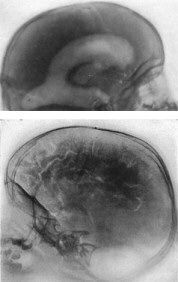
The crucial difference that struck Walter Dandy was the possibility of distinguishing flesh and air on an x-ray.
Knowing that the brain is surrounded by cerebrospinal fluid (CSF), which also fills internal spaces called the ventricles, he decided to simply replace the fluid with air and x-ray the patient.
He published his first results in 1918. He described how he drilled a hole in the skull of a patient and carefully removed the CSF from the ventricles and replaced it with air.
The following year he published another study where he deliberately filled this space with air as well, so the surface of the brain was surrounded by the gas and so could show up on an x-ray.
Neuroimaging, before the invention of television
Детский аутизм и эпилепсия
Medscape: What is the risk for epilepsy in autism?
Dr. Chez: The risk for epilepsy in autism is 10%-30%, and it usually develops in the teenage or early adult years. Children with autism who are lower functioning, with mental retardation and cerebral palsy, for example, are more likely to develop epilepsy.
In addition, there are many children with autism who demonstrate epileptic spikes when monitored on 24-hour electroencephalography, but who do not manifest clinical epileptic seizures. These may be worth treating with antiepileptic drugs, as treatment may lead to improved behavior and receptive language. If the spikes are in the central temporal region, affecting the language area, I will usually try a trial of valproic acid. Valproic acid may also act as a mood stabilizer in these children, and also inhibits interleukin 1 cytokines, which may provide additional benefit. Other antiepileptic drugs may also be effective, although I have not seen good results with carbamazepine. There is also anecdotal evidence of improvement with the ketogenic diet.
Dr. Pellock: This is a controversial area. There are a few cases where treatment of epileptic spikes has resulted in improved behavior. However, without a clear manifestation of seizures, it is frequently difficult to know whether the short and long-term risks of the medications are really warranted. Clear goals need to be established to determine whether the treatment benefits the child. As a routine, I do not treat isolated spikes on the electroencephalogram, just as I would not treat isolated spikes in any child, with or without autism.
An Update on Autism -- Perspectives and Treatment: Autism and Epilepsy
Подписаться на:
Сообщения (Atom)